


Knife Hit Master: Arcade Game
4.76.00 Reviews
App Specs
- Version
- 0.5.1
- Updated On
- License
- Free
- Downloads
- 10,000+
- Developer
- Playoff Games Co.
- Categories
- Arcade
- Platform
- Android
Screenshots
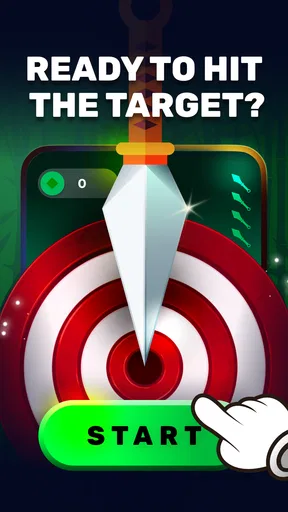
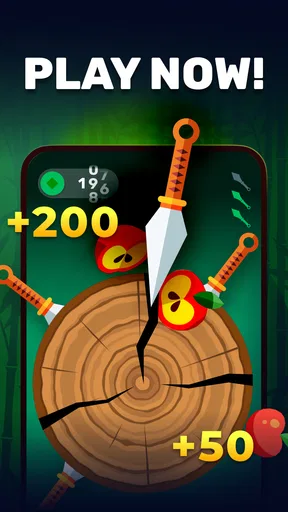

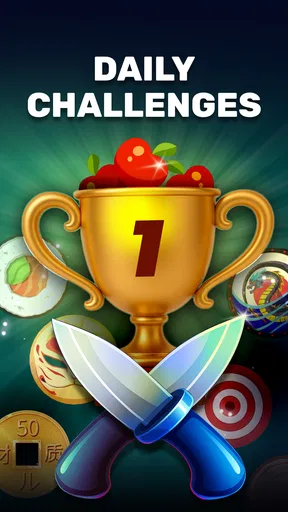

 Analysis by AppCompare
Some arcade games ask for long sessions and complicated controls, but Knife Hit Master takes a much narrower approach: I tap to throw knives, try to clear the target in front of me, and move through short, quick levels. That focused loop is the reason I found it easy to pick up when I had only a few spare minutes. It is a game built around timing rather than exploration, story, or character development, and that simplicity can be either its biggest strength or its main limitation.
Created by Playoff Games Co., this free arcade game is aimed at Everyone and runs on Android 9 or later. It has reached over ten thousand installs and holds a 4.7 average from around two hundred ratings, which suggests that its straightforward idea has connected with a modest but interested audience. The current version is 0.5.1. I would not approach it expecting a large arcade package; I would approach it as a compact reflex game that makes one action—throwing knives—carry the entire experience.
Why the one-action design matters
The important capability here is not simply that the game lets me throw knives. It is that the whole play session is organized around judging the right moment for each tap. The target becomes a small timing problem: I watch its movement, identify an opening, and commit to the throw. That makes every input feel more deliberate than the control scheme initially suggests.
In practice, this creates a useful contrast between easy controls and demanding attention. I do not need to learn a virtual joystick, remember a collection of abilities, or manage a complicated menu before playing. My finger performs one familiar gesture, but the result depends on whether I press at the right instant. The simple control removes learning friction without removing the need for concentration.
That distinction is why I think the game works best as a short-session title. It is immediately understandable, so I can open it during a break without mentally preparing for a campaign. At the same time, the timing requirement gives the action enough resistance to stop it from feeling like an entirely passive tapper. The challenge comes from execution, not from discovering a hidden system.
The game’s arcade identity is especially clear in the way progress is divided into fast levels. A level gives me a compact objective, and clearing it provides a natural stopping point. This is more convenient than a game that expects me to remember a long sequence or maintain a twenty-minute run. If I am interrupted, the structure makes it easier to return later without losing the basic thread of what I was doing.
Reading the target instead of rushing the tap
My most useful adjustment was to stop treating every opening as an invitation to throw immediately. The target can make a quick attempt feel tempting, but a rushed tap is usually less valuable than waiting for a clearer opportunity. I found that watching the movement for a moment before acting helped me settle into the level instead of reacting to the first visual cue.
Worth Reading Before You Choose

Flipboard Shows What News Apps Must Do Beyond the Feed

Switching to Android Auto Means Rethinking Your Driving Routine

Google Calendar Makes a Crowded Week Easier to Manage

Ludo King Makes the Most of the Minutes Between Plans

Baby Panda World Brings Quick Play to Modern Phones, but Its Game Library Feels Busy

ESPN’s Live Game View Makes Following Close Games Easier
This is a small habit, but it changes the feel of the game. The first few attempts are about understanding the rhythm of the target. After that, the challenge becomes maintaining that rhythm while avoiding careless taps. I would recommend using the opening moments of a level to observe rather than trying to finish as quickly as possible. The game rewards calm attention more than frantic speed.
Another practical tip is to treat each knife as a separate decision. I do not gain much by mentally jumping ahead to the end of the level while the current throw is still unresolved. Focusing on the next safe opening keeps the action manageable and reduces the kind of mistake that comes from trying to predict too much at once.
What a normal play session feels like
A realistic use case is a short wait at a bus stop, a pause before an appointment, or a few minutes after finishing a task. I can start a level, concentrate on its timing, and stop after a clear result rather than feeling forced into a long commitment. That makes the game more suitable for fragmented free time than arcade titles built around extended runs.
It also works as a small reset between demanding activities. The controls are direct enough that I am not spending the first few minutes learning a tutorial, while the timing keeps my attention occupied. I would not use it when I want to relax completely, because missed throws can become irritating when my concentration is low. It is better described as a quick mental switch than as background entertainment.
For someone who enjoys improving through repetition, the compact levels provide a clear reason to try again. A failed attempt points toward a specific correction: wait longer, watch the target more carefully, or stop tapping on impulse. That is more satisfying than failure caused by a confusing interface. I can connect the mistake to my own timing, which makes another attempt feel worthwhile.
However, the same narrow loop means the game may lose its appeal if I want variety. Players who prefer puzzles with several solution paths, platforming with movement, or arcade games with different modes may find the knife-throwing focus too limited. The game’s identity is clear, but it does not try to be a broad collection of arcade activities.
Where it compares well with familiar arcade alternatives
Compared with endless arcade games, this one feels more contained. Endless formats often encourage me to chase a higher score until a run finally ends, while the level-based structure gives me smaller objectives. That is helpful when I want a definite finish, although players who enjoy a single escalating challenge may prefer the pressure of an endless run.
Compared with action games that use several buttons or gestures, this title is much easier to understand. There is less chance of confusing movement with attack or triggering the wrong ability. The trade-off is depth: a more elaborate arcade game can offer a wider range of strategies, while this one asks me to refine the same central timing skill.
It also differs from casual games that are mostly about watching progress numbers rise. Here, my input determines whether the target is cleared. That gives the tap more meaning, but it also means the game is less forgiving when I am distracted. If I want something that can run while I barely look at the screen, this is not the better choice.
The best way to use its focused challenge
I get the most from the game when I play in short, intentional bursts rather than treating it as a title that must fill an entire evening. Before tapping, I let myself identify the target’s pattern. During the level, I keep my attention on the next opening. After a mistake, I try to name the timing error instead of immediately tapping again without changing anything.
This approach turns a very small control scheme into a modest practice exercise. I am not learning a complex combo system, but I am improving visual timing and impulse control. That is one of the less obvious strengths of the design: because the game offers so little to manage, I can see more clearly whether the problem is my observation, my patience, or my reaction speed.
It is also worth deciding what kind of satisfaction I want before installing it. If I like the feeling of gradually making a precise action more reliable, the game has a clear appeal. If I need unlockable variety, a story, social competition, or a large amount of content, the basic knife-throwing loop may feel too spare. A free download is convenient, but free does not automatically mean it will match every player’s preferred kind of arcade entertainment.
The friction points I noticed
The biggest limitation is the possibility of repetition. Since the central action remains the same, my enjoyment depends heavily on whether I like refining timing. The game does not need a complicated feature list to work, but it also cannot hide from the fact that its main idea is very focused. After several sessions, I may want a break simply because I have been concentrating on the same type of decision.
There is also a tension between quick access and sustained engagement. The short-level format makes the game convenient, yet it can make a session feel disposable if I am not personally motivated by improvement. Someone looking for a deep progression system should compare it with a larger arcade game before settling here. This is a title for immediate play, not necessarily for building a long-term routine.
Accuracy matters more than I expected from such a minimal game. A tap that feels slightly early can spoil an otherwise good attempt, so playing while walking, riding in a moving vehicle, or dealing with interruptions is not ideal. The best results come when I can look at the screen properly and give the target my full attention for a short while.
The age rating of Everyone makes the game approachable for a broad audience, but that should not be confused with universal appeal. Younger players may enjoy the direct action, while older players who want a more layered arcade experience may find it too plain. The appropriate question is not whether the game is accessible; it is whether a player enjoys a clean timing test without needing additional systems around it.
Who benefits most from the design
I would recommend it first to people who want a free arcade game that can be understood almost immediately. It suits players who enjoy testing their reactions, repeating a short challenge, and stopping after a level rather than committing to a long session. It is also a reasonable choice for anyone who prefers one clear control to a crowded interface.
It may appeal to parents looking for a simple game with an Everyone content rating, provided the child enjoys timing-based repetition. The direct objective is easier to explain than a game with several resources or rules. Still, I would expect the strongest fit to be a player who likes practicing precision, not someone who needs constant novelty.
People who should skip it are those seeking an adventure, a narrative campaign, deep customization, or a multiplayer-focused experience. I would also point elsewhere if my main goal were a game I could play without looking closely at the screen. The knife throws depend on attention, so the title is not a good match for distracted play.
Its current 0.5.1 version and relatively small install base make it feel like a compact, developing arcade choice rather than a huge established platform. That is not a problem by itself; in fact, the focused design is easy to appreciate. It simply means I would judge it by the quality of its central loop, and that loop needs to be enjoyable on its own.
My recommendation after playing
For me, the strongest reason to try Knife Hit Master is the way it turns one tap into a test of patience and timing. It is quick to learn, convenient for short breaks, and clear about what it wants me to do. I especially like that a failed attempt usually teaches me something practical about when I pressed, rather than leaving me confused about the controls.
My recommendation comes with a clear condition: enjoy the core action before expecting anything else from it. This is not the right download for someone who wants a large arcade package or a constantly changing set of mechanics. It is better for a player who appreciates a narrow challenge that can be picked up, practiced, and put down without ceremony.
Playoff Games Co. has chosen a focused direction, and the game is at its best when that focus matches the player’s mood. I would keep it available for brief waits and quick concentration breaks, especially when I want a level with a definite endpoint. If precise tapping and gradual timing improvement sound satisfying, this is a small arcade game with a clear purpose; if they sound repetitive, a more varied alternative will probably provide better value for my time.
Pros
- Simple one-touch controls are easy for beginners to understand.
- Short rounds make it convenient for quick gaming sessions.
- Increasing difficulty keeps later stages challenging and engaging.
- Offline play is useful when you have limited or no internet access.
- Satisfying hit effects make successful throws feel rewarding.
Cons
- Timing can feel unforgiving
- especially in advanced levels.
- Repeated gameplay may become monotonous after extended sessions.
- Ads may interrupt the experience between attempts or stages.
- Progress can feel slow without spending time on repeated retries.
- Small targets and fast movement may be difficult on smaller screens.
FAQs for Knife Hit Master: Arcade Game
What is Knife Hit Master: Arcade Game?
Knife Hit Master: Arcade Game is a casual timing game built around throwing knives at rotating targets. The main objective is to tap at the right moment, avoid hitting knives that are already stuck in the target, and complete each stage successfully. As the levels progress, targets generally become faster or more difficult, making precision, patience, and quick reactions increasingly important.
How do you play Knife Hit Master: Arcade Game?
Gameplay is simple to understand, but the later stages require concentration. Players usually tap the screen to launch knives toward a rotating object, aiming for open spaces while avoiding previously placed blades and other obstacles. Completing a target allows you to move forward, while mistimed throws can end the attempt. The one-touch controls make it suitable for short gaming sessions.
Is Knife Hit Master: Arcade Game free to download and play?
Knife Hit Master: Arcade Game can generally be downloaded without an upfront purchase, although the exact availability of advertisements, optional purchases, or other monetization features may depend on the version and platform. Before installing, it is worth checking the official store listing for current pricing details, in-app purchase information, supported devices, and any permissions requested by the app.
Does Knife Hit Master: Arcade Game work offline?
The core throwing gameplay may be playable without a constant internet connection, which makes the game convenient for travel or quick offline sessions. However, certain features could require connectivity, including advertisements, leaderboard functions, analytics, updates, or promotional content. Because offline behavior can vary between releases, players should test the game after installation rather than assuming every feature will work without internet access.
Is Knife Hit Master: Arcade Game suitable for children and casual players?
The game is easy to learn because it uses straightforward tapping controls and does not usually require complicated instructions. It can appeal to children, teenagers, and adults who enjoy short reflex-based challenges. Nevertheless, parents should review the store rating, advertising content, privacy information, and possible in-app purchases before allowing younger children to play, particularly if the device is linked to a payment account.


